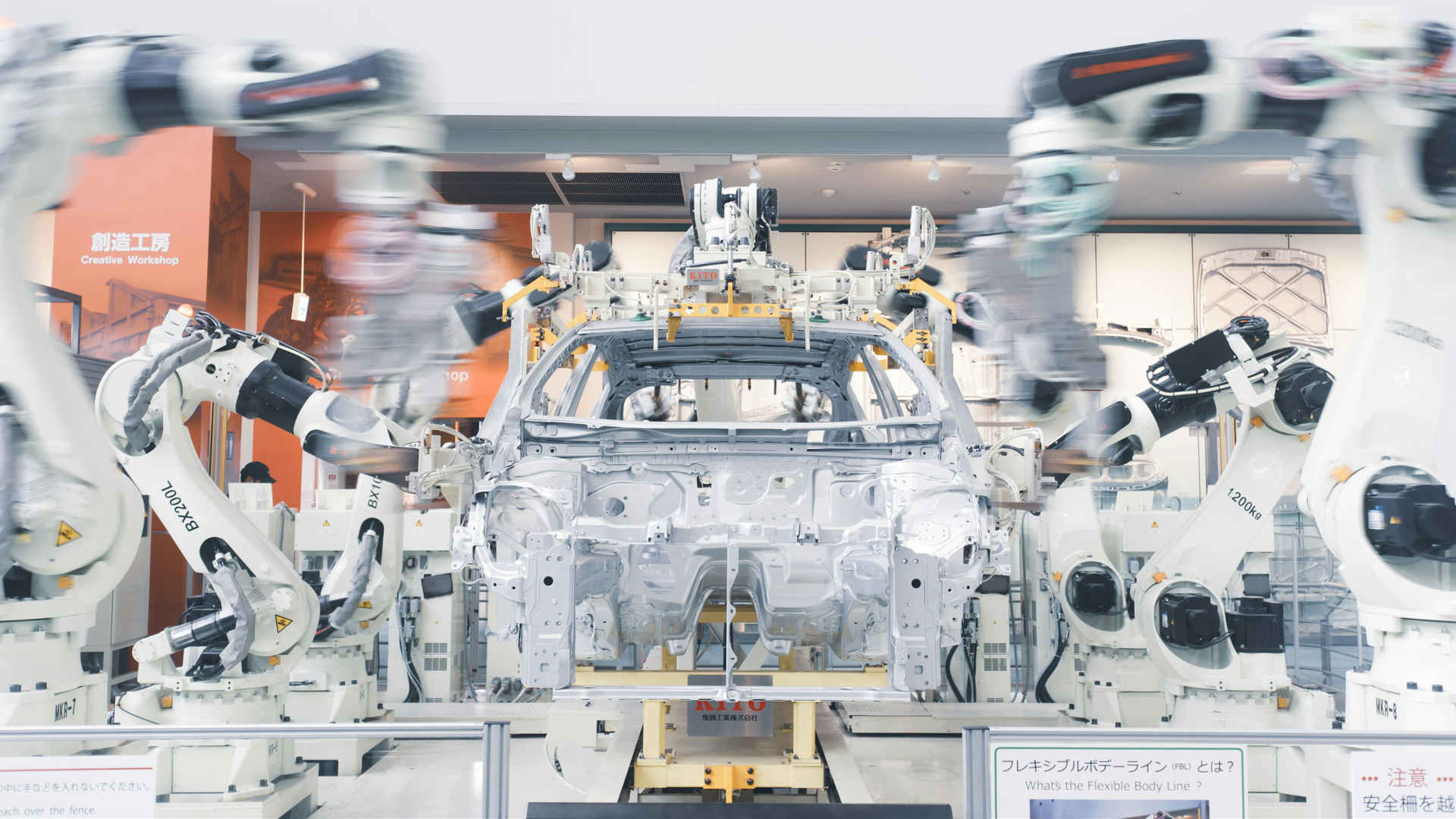
You cannot be a technology driver in the market and at the same time be a commodity buyer. It’s not possible.
Mahesh Kodumudi, then Volkswagen’s purchasing chief for North America, said that at an industry conference in Traverse City, Michigan, in August 2016 [1]. He was defending Volkswagen’s technology partnerships and describing FAST, a programme launched the year before to treat selected suppliers as partners, and he pledged that Volkswagen would not squeeze its suppliers to hit a spending target. In the same weeks, a dispute with two suppliers outside that programme, over a cancelled contract, had stalled six of Volkswagen’s assembly plants in Germany. Whether the pledge held is a question for later, and nothing here assumes the answer.
I think Kodumudi was right, and I think the sentence has become truer in the ten years since. A car maker that wants to lead in technology cannot buy that technology the way it buys standard nuts and bolts. The question is whether the way the industry buys lets a company be the one without being the other.
I come to that question from a book. In it I argue that buying has changed more than the organisations that do it. It professionalised sideways rather than upward: each function became expert in its own concern, and no role was designed to integrate those concerns into one decision. Most commercial problems that look like execution are problems of design [2]. The car industry is where I want to test that, for three reasons:
- Car makers buy most of what goes into their cars, and more and more of the technology that defines them
- Across Europe, the industry is in the middle of two changes at once, in what a car is made of and in who it competes with
- Everyone in it has an explanation for the trouble, and how the companies buy rarely appears in it
I suspect the way they buy matters. This is the first in a series of five articles that try to find out whether it does, in the open, one part at a time, each standing on its own and none of them written with its conclusion already reached.
This first part shows a meeting that people on both sides of the table should recognise, asks what it says about how a car maker buys and why the people in it are not the problem, and ends with three choices a leadership team can examine in its own organisation and one thing to do on Monday.
If you run purchasing, I hope you see the room and tell me where I have it wrong. If you sit on the other side of the table, you will know whether it rings true.
Why buying decides so much in this industry
Most of what goes into a car comes from suppliers: the parts, the systems, and much of the engineering behind them. CLEPA, the association that represents Europe’s suppliers, puts their share at 75% of a vehicle’s total value, its own estimate of a value share and not of price or profit [3]. The car maker designs the vehicle, decides what goes into it, integrates and validates the systems, builds the car, and answers for it when something fails. What that share means is simple: the people who buy it decide much of what a car costs, and more and more of what it can do.
In the industry’s own language the car maker is the OEM, the original equipment manufacturer, and its suppliers are tiers, the first tier selling to it directly. The buying goes by procurement, purchasing, or sourcing, depending on the company. From here on I will say car maker, supplier, purchasing, and buyer, so that nobody has to translate from their own company’s vocabulary.
What they buy has changed. Suppliers have always engineered a great deal of the car. What has grown fast is the share of it that is software, battery cells, chips, and sensors, bought from companies that often know more about those things than the car maker does.
Volkswagen will appear often in this series, for one reason: its record of how it buys, in annual reports, press releases, and one famous dispute, is detailed enough for a reader to check what I say. It said in November 2019 that it developed less than 10% of its car software in-house and set a target of at least 60% by 2025 [4].
What followed was a mix of making, buying, and partnering: its own software company, CARIAD, delivering across eight model series in 2025 at a loss [5], a joint venture with Rivian for the next vehicle architecture [6], and Xpeng as a partner in China. Whether the 60% was reached, the company has not said in anything I have found, and I do not claim it either way. What the sequence shows is a car maker deciding, year by year, how much of the thing that most defines its cars to make and how much to buy.
The money is thin on both sides of the table. Bain’s tracking of the fifteen largest car makers and the hundred largest suppliers had the makers at an operating margin of 4.3% in the first half of 2026 and the suppliers at 7.1%, the eighth quarter in a row with the suppliers ahead [7]. Four years earlier a different study of different companies had the order the other way round, ten large car makers at 8.3% for 2022 against 4.6% for the traditional suppliers, the makers of parts and systems, and the two are not one series [8].
The same study, for the same year, had the semiconductor companies at 29.7% and the software companies at 21.6% [8]. Its chart calls them new tech against old, which is about what they sell, not how long they have sold it, and the figures are margins by category of company, not margins on what those companies sell to car makers. What the figures show is that a car maker now buys from suppliers whose economics have little in common, which is a reason to doubt that one way of buying fits them all. Thin margins describe the car makers and the makers of parts and systems, not everyone who sells to them.
Operating margin is the share of sales left after the costs of making and selling, before interest and tax. It is worth a sentence because it explains the attention buying gets inside a car maker. When most of what goes into a car is bought from suppliers, the people who buy it hold much of the cost, a lower agreed price gives purchasing a measurable result to report, and on margins this thin that result is read closely. Purchasing is strong in many car makers for a reason, and the reason is where the cost sits.
A car maker’s revenue comes from the cars it sells, from the aftermarket, the parts, servicing, and repairs for as long as the cars are on the road, which it shares with independent garages and parts makers, and from financing and leasing. How the profit divides between those is harder to see from outside. The divisions a car maker reports do not necessarily separate what the cars earn from what the parts earn, and Volkswagen’s do not [9]. Nothing in this article depends on that split.
That is the context in figures. The book’s argument is easier to see in a room, and the room is familiar.
A meeting somewhere in Europe
Picture the meeting. It is the annual price review for one part, an hour in a meeting room at a European car maker, a laptop open on each side of the table, two people. A supplier’s account manager has driven in to see the buyer responsible for her part, and the agenda has two items, this year’s price and a proposal her company sent in writing a month ago.
Her company makes the battery management system, the electronics and the software that keep the battery safe and decide how much it can give, built on a platform the supplier has developed over years and adapted to this car together with the car maker’s engineers. He is that buyer. He has prepared. He knows the history of the part and of the relationship with her company, the volumes, the price curve, and the number his target needs this year.
She wants two things: a price her company can live with, and an answer to a proposal. He wants the number his target requires, and his reasons are not his alone. The programme has a cost it must stay inside, the material-cost line is read every month by people above him, and a reduction given by one supplier is expected of the others like it. He also wants the car to work, and he knows that a change to battery software is not free to accept even when it is free to buy. It has to be validated, released, and documented, and the people who do that have a queue of their own.
The contract already commits her company to lower its price every year, in this case by 2 to 3%, as long-term supply agreements in this industry commonly do [10]. This year his target needs more than the contract gives, and he says so, without drama. She asks what the car maker can offer in return. The honest answer is nothing. The thing she would value most is a commitment to volume, and that is not his to give. Volumes are a forecast, and the contract commits to none [11].
Then the proposal. Her engineers believe they have found a change to the battery software that would remove a problem the car maker’s own engineers have been chasing for months. It is not in the specification, it would take her company weeks of work, she would want to be paid for it, and nobody in the room can say yet whether it works. He agrees that it is worth looking at and writes it down. She knows the engineers who want it, and so does he. What neither of them can say is who has the authority to approve paid work outside the specification, where it sits in anyone’s priorities, or when there will be an answer.
Towards the end he says something that is true. The company wants its suppliers to be partners. It wants them to bring what the company does not know itself. That is the strategy, it is in the annual report, and he means it [12][13]. Then the conversation returns to the number.
On the way home she has two things to report. The price, still open, to be settled by email. And the proposal, which is waiting for a decision nobody owns. Back at her company, a different conversation decides more than any contract does: which customer gets the best engineers next year. Nobody in the meeting asked.
What the meeting is about
There is a difference between buying something you have specified and working with someone whose knowledge decides what you can specify.
For standard, fully specified nuts and bolts, the first is right. The drawing is the product, the market sets the price, and a buyer who secures the supply from qualified suppliers at the lowest whole cost, with quality, logistics, continuity, and the risk of a stopped line counted, has done the job well. Not every fastener is like that, and not every piece of software is unique, so the line does not run between hardware and software. It runs between what you can fully specify and what you cannot.
For the system that manages a battery, the drawing is where the conversation starts. Most of what the supplier could contribute is not on it, because the supplier learned it on other cars, for other customers, over years. The car maker cannot specify what it does not know.
A reverse auction makes the price competition visible. Suppliers compete online for a contract, adjusting their bids against competing offers. Who may bid, how the bids are ranked, and who wins are separate decisions. The method is documented in automotive purchasing [14] and in services such as software development [15]. Those are separate bodies of evidence, not a count of automotive software contracts bought this way.
QAD, which supplies BMW with purchasing software, describes an inquiry prepared jointly by research and development, cost engineering, logistics, quality, and purchasing. Technical and other required approvals come before negotiations and, in certain cases, auctions. An awarding committee decides afterwards [16]. The lowest price need not win, although the automotive study above describes a setting where the lowest bidder was generally expected to win [14]. The question is what happens to differences between suppliers along the way. Where can a better understanding of the problem, a different technical approach, or lower risk change the decision?
The car makers know this. They say it in their own documents, in the language of partnership and access to supplier innovation [12][13][17].
Volkswagen’s 2019 annual report described committees for make, buy, or partner decisions and for the award of vehicle software [18]. Its 2024 and 2025 reports list purchasing’s priorities, efficiency, sustainability, resilience, and process quality, and no longer mention the committees, which says nothing about whether they still meet and something about what the company now chooses to report [19][20].
In October 2026 Volkswagen described technical development and purchasing working together earlier, while the product concept is still taking shape [21]. That is the company’s account, not proof that every supplier experiences it. But it shows why “engineering specifies, purchasing decides” is too simple. Preparing a specification, approving a supplier, negotiating a price, awarding a contract, and funding an improvement are different decisions. The question is whether they connect when a supplier brings something the specification did not ask for.
The documents, taken together, say the company knows the difference between a bolt and a brain. What they do not say is whether that knowledge reaches the meeting. Everything in the room above was built to settle a price. The proposal was received, written down, and sent on. What the room did not have was anyone with the authority to decide it, or a date by which someone would.
That is the tension this article follows: a company that says it wants its suppliers’ know-how, and a way of buying built for what it has already specified.
Why the buyer is not the villain
Go back to the buyer in that meeting. It would be easy to make him the villain of this story, and it would be wrong. He is doing the job he was given, and most of the job is legitimate. Three parts of it are beyond argument:
- Cost. Someone has to control the cost of everything the company buys, which by the suppliers’ own estimate is most of the car, and on margins as thin as the ones above there is little room for that cost to drift
- Supply. Someone has to make sure the parts arrive, which the chip shortage of 2021 turned from a routine into a crisis
- Risk. Someone has to manage the risk in contracts that run for the years a model is built and for the years of parts supply that follow, because a car is produced for a few years and supported for many more, and the supply agreement has to cover both [22]
A company that neglected any of the three would not be in business long.
The question is what else the buyer is asked to do, and what he is measured on. Volkswagen published the targets of its purchasing organisation in its 2016 and 2019 reports: material and investment costs, the timely award of contracts, sustainability, and, in 2016, a dimension it called “Access to supplier innovations”, with KPIs assigned to each [13][18]. Its later reports describe priorities rather than a target system [20]. Neither says what a buyer’s bonus depends on. I do not know, and I doubt the suppliers know. One company’s published targets do not describe another’s, and a corporate priority is not an individual’s incentive. I use Volkswagen’s because it published them.
How a target reaches a buyer is ordinary management, and it is worth seeing plainly, because what gets measured gets done. Volkswagen’s 2025 report describes a budget planned down to the operating cost centres and reviewed every month against target, with variance analyses and action plans [23]. That documents the cadence at one company, not what any buyer’s line contains or how much of his bonus hangs on it.
The comparison between suppliers can be written down too: in 2000 Ford set a supplier’s annual reduction at the level it expected from its other large suppliers, measured by commodity and by region against competing suppliers, with exceptions agreed in writing [24]. A dated contract from one car maker, not today’s rule. Between them they say that a measurable price target gets regular attention by design. Whether a proposal whose value nobody has measured yet gets the same attention is the question the meeting above was built to ask, and neither document answers it.
A company can reward a saving this year and pay for it later without anyone doing anything wrong. The price reduction is recorded at once, in the currency purchasing is measured in, and credited to the buyer who got it.
The proposal is a different kind of thing. Its value, if it has one, arrives later, in a problem that stops recurring and in engineering time not spent chasing it, and it has to be estimated by one function and checked by another before anyone can book it. The supplier believes it works. Nobody in the meeting is in a position to know yet. So the reduction is counted now, to purchasing’s credit, and the proposal at best later, to someone else’s, and the one that is counted now has the easier path. That is attribution and timing. It is not malice, and it is not a law.
The same shape has been found elsewhere. The late Clayton M. Christensen, Michael Raynor, and Rory McDonald, writing in 2015 about established companies and the entrants that unseat them, describe how the priorities that serve a company’s existing customers become institutionalised in the processes that allocate its resources, so that the familiar opportunity is funded as a matter of course and the unfamiliar one struggles to get a hearing [25]. Their finding is about customers and competing products. Reading it across to a supplier’s proposal inside a purchasing process is my analogy, not their finding.
This is what I meant by buying that professionalised sideways. In my book I call the result well governed and poorly integrated: every function does its part correctly, and nobody is designed to hold the whole decision [2]. The buyer’s job is one piece of that design, and he did not draw it.
Research on how suppliers choose their preferred customers points the same way. A 2012 survey of 233 salespeople at American automotive suppliers found that buyers who involved their suppliers early and behaved reliably were more likely to be treated as preferred customers, that preferred customers were the ones suppliers were willing to offer new technology, and that how much of the supplier’s sales the buyer accounted for made no difference [26]. That is a survey of what suppliers say they would do, not a record of what they did. It is enough to make the question at the end of the meeting a real one.
So the buyer is not the villain. The design of his job may be the problem, and that is a different thing to fix.
The method, and the man whose name it carries
Purchasing people in the car industry know one name from the 1990s, and it is worth explaining why, because the method he stood for is the price side of the meeting above.
José Ignacio López de Arriortúa, who passed away in June 2026, ran purchasing at Opel from 1987, where he built the supplier cost programme later known as PICOS, and from 1992 at General Motors in Detroit, as its purchasing chief worldwide [27]. In March 1993 he moved to Volkswagen with seven of his colleagues, in a dispute with General Motors over documents that went to court and is a story of its own, for the next part of this series [27][28].
What matters here is the method. The way the German news magazine Der Spiegel described it, looking back in 2016, was prices fixed in writing for five years, with a reduction built into every year [29]. The reduction for each of the five years was agreed in advance and written into the contract, so the price did not have to be negotiated again each year. The savings came first, and they made him famous.
The warning that carries his name is just as simple. Pay less now, and the bill can arrive later, in quality problems, in suppliers that stop investing in you, and in supply that fails when you need it most. Interviews with suppliers in the mid-1990s describe unilateral price demands, and also that Volkswagen moderated the policy after 1993, partly out of concern for quality [30]. In 1996, the Washington Post reported detractors’ claims that López threatened GM suppliers’ contracts over price or quality, alongside his supporters’ defence [31]. One German negotiation trainer still teaches the warning as the López-Effekt [32]. Nobody has shown it to be a law. Volkswagen’s own moderation suggests it is at least a risk.
Why he matters to this article is the contract in the meeting. The clause that lowers the price every year and the request for more than the clause are the mechanism he made famous, written into the ordinary paperwork of the industry thirty years on. He did not invent the annual reduction, which is older than him and can be run in more than one way. The practices in the meeting are documented in surveys, interviews, and practitioners’ accounts from 2014 to 2026, long after he left Volkswagen [10][11][33][34]. They outlived him as practices. That is a different claim from saying he caused them, and it is the one the evidence supports.
The pressure could be more direct. In 2015 the German business weekly WirtschaftsWoche reported a supplier executive’s account of negotiations in a hotel near Frankfurt. Competing suppliers sat in separate rooms while the buyer moved between them, asking each to beat a rival’s price. The executive, whose name was changed, said that withdrawing would mean no further orders from that car maker [35]. This is reported testimony, not a measure of how common the practice was. Explaining the pressures on a buyer does not excuse intimidation.
Pressure may secure a concession. It gives the buyer no assurance that the supplier will bring its next idea, share knowledge beyond the specification, or give this customer’s problem priority. Those contributions also need a commercial reason and fair payment. The automotive survey discussed earlier also connects preferred-customer status with willingness to offer new technology [26]. In a 2016 study combining supplier interviews in China with an experiment involving business-school participants, coercive buyer behaviour reduced stated willingness to share knowledge [36]. That is evidence about willingness, not a measurement of innovation lost by European car makers.
That is the contradiction I want the industry to examine. A company asks suppliers to be partners, then uses a method that may discourage the contribution it wants. Sellers can make a related mistake: talking about features without understanding the customer’s problem. Buyers can become equally absorbed in price and overlook what the supplier could help them solve.
Toyota is the usual counter-example, and it earns a paragraph because it shows that the clause by itself settles nothing about a relationship. Jeffrey Liker and Thomas Choi‘s 2004 account of Toyota and Honda describes the pursuit of lower costs too, but with the car maker’s own engineers working in the supplier’s plant on how the part is made, inside a way of working the authors sum up as understanding how suppliers work, developing their capabilities, sharing information intensively but selectively, and helping them improve their processes continually. At Honda, in the same account, the gains from that joint work were shared with the supplier [37].
The difference from the clause in the meeting is not the number. It is how the cost comes down, whose engineering effort brings it down, and who keeps what. A reduction reached that way leaves the supplier with a reason to keep improving and the car maker knowing what the part costs. It is a 2004 account of two companies, not a description of every Toyota contract today, and the third choice below carries the qualification that matters for volume.
A different approach still asks hard questions. Buyer and supplier need to understand the problem, agree how value and risk will be assessed, and decide what work is worth paying for. Joint improvement needs agreed terms for sharing the gains. Fair treatment matters in the contract and in the daily relationship, the two areas the suppliers’ index below rates lowest [34]. Price remains part of that conversation. The three questions below ask whether the organisation makes room for the rest.
The hundred-week car
Now the other side of the title. In its press material for the new Twingo in March 2026, Renault said the car had taken “just 100 weeks between kick-off and production – twice as fast as previous electric models” [38].
The arrangement behind that number is worth a moment, because it is the arrangement rather than the number that matters here. The design began in France, at the Technocentre, on the small platform the car shares with the Renault 5 and Renault 4, and France kept the development of the platform, the electronics, the software, the infotainment system for navigation, apps, and connectivity, which Renault calls multimedia, and the driving aids. The second phase moved to Shanghai, to ACDC, the development centre Renault had set up there in 2024, where around a hundred engineers were responsible for systems integration and project management. The car is assembled in Novo Mesto in Slovenia, with many of its suppliers close to the factory.
Then the sentence that connects the arrangement to the speed, in Renault’s words: “a streamlined governance structure allowed for faster decision-making, reducing back-and-forth between business lines” [38].
The project lead, Jérémie Coiffier, gave the Italian business daily Il Sole 24 Ore a more concrete version of that sentence in December 2025. What changed in Shanghai, he said, was the shortening of technical decisions to one day. In Europe the time is a week [39].
A day against a week. Read it beside the meeting above. The proposal that nobody owns needs both a technical assessment and a decision on paid work, and Coiffier’s sentence does not say how those would be handled. Different changes are different decisions. What his sentence does say is that at one European company, arranged one way, technical decisions closed in a day, and that the same company, arranged the usual way, takes a week. The question for the meeting above is which arrangement it sits in. Renault also names what it reduced, back-and-forth between business lines, which says the back-and-forth was there and not what it cost.
What the Twingo does not give is an explanation of purchasing’s part in the hundred weeks. Nobody has shown that purchasing explains the hundred weeks, and Renault does not claim it. Its own account lists a shared platform, a local ecosystem, new industrial partners, and cross-functional work alongside the governance. The Chinese development times that get quoted, about 24 months at selected electric-vehicle makers against 40 to 50 or more at the incumbents, are consultancy benchmarks of selected programmes, and McKinsey’s estimate is that vertical integration and supply strategy could save three to four months, one lever among several [40][41]. Coiffier is describing one project at one company. What the Twingo gives me is smaller than a theory and more useful. The day is available to a European company. One of them has had it.
Fast decisions say nothing about how suppliers are treated. In February 2026 China’s car makers’ association reported that payment times at seventeen major makers had shortened over the year, and also that a few of them were demanding that suppliers lower prices, or accept other unreasonable terms, in return for being paid sooner [42]. In September the industry ministry acknowledged the progress and the delays that remained, and the rules it issued with the market regulator say plainly that a shorter payment period is no reason to push down a supplier’s price [43][44]. The pressure is not confined to Europe.
That matters to the argument here. Pressure on price and payment is found where development is fast, so the comparison with China settles nothing about pressure as a cause of slowness, in either direction, and China’s speed does not show that its suppliers are treated better. A company can bring purchasing and engineering together early and still squeeze its suppliers. How decisions are made and the terms on which suppliers are expected to contribute are two different questions, and this article asks both.
Volvo Cars tells a related story about a different kind of choice. The EX30 is built on a platform from Geely, Volvo’s owner, rather than on one Volvo developed itself. Volvo repositioned it as a Volvo car and did the safety, the upper body, and the design.
Asked at the company’s capital markets day in September 2024 about technology collaborations, Jim Rowan, then its chief executive, used the car as his example and put the result in one line: “we were in production, far, far quicker than we would have been if we developed a brand new platform” [45]. Anders Bell, then its chief engineering and technology officer, had just said that such collaborations are “always a business and a customer decision at its core”. Rowan stepped down in March 2025, and Bell moved in September 2026 to lead a new strategic initiative inside the company, which changes nothing about what they said and when [46].
The limits are plain. That is a management attribution, with no measured time beside it, and it concerns a platform from the company’s own group, not an independent supplier. It is still a European car maker saying, in public, that it got a car to market faster by using what already existed instead of making its own, and that the choice was a business decision. Make or buy is a decision the company takes. How the company buys, once it has decided to buy, is the one this article is about.
The familiar explanations, and what they leave open
Renault went to Shanghai, and Volvo used Geely’s platform. Both examples connect European car makers to China, but they leave a wider question open: how much of the difference in speed and cost comes from the conditions companies operate in, and how much from the way they work? The familiar explanations deserve a look before we return to purchasing.
- Subsidies. Real. The European Commission investigated for a year and concluded in October 2024 that the battery-electric value chain in China benefits from unfair subsidisation, through preferential financing, grants, goods and services supplied below market rates, and tax exemptions, and it put additional duties on battery-electric cars from China for five years, from 7.8% to 35.3% by maker [47]. What the finding does not say is how much of the gap in price or in speed the subsidies explain, and it says nothing about how anyone buys
- Scale and production costs. Real. China’s battery industry illustrates both. The scale that matters most for an electric car is in batteries. In 2025 China held over 80% of the world’s battery manufacturing capacity and production, and average battery pack prices per kWh were 30% lower there than in North America and 35% lower than in Europe [48]. The cost side is a separate measure: the International Energy Agency puts production costs in Europe and the United States as much as 50% above China’s, mainly through manufacturing efficiency and automation and cheaper materials and components, in a comparison that leaves public support out [48]. A European board does not get that scale by wanting it
- Vertical integration. Real, and rarer than the story suggests. BYD makes its own cells, chips, and motors, and Rhodium Group calls it an outlier even among Chinese makers for how much of the car it makes itself [49]. The cells themselves come largely from specialist battery companies. Of the ten largest battery makers in 2024, nine are specialists, and they accounted for about 72% of the battery energy installed in electrified vehicles that year [50]. Integration is a choice made part by part
- Speed. Real, within the limits above. What the fast companies are described as doing is organisational: steering a project with four or five executives who meet several times a week and decide on the spot, starting joint development with suppliers early, having purchasing review designs before they are frozen, and beginning tooling earlier in the design cycle [40]. Those are choices about who decides and when, which is where this article is going
- Legacy. Real, and the hardest to see from inside. An established maker carries plants, supplier contracts, interfaces between parts, and routines built around the old architecture. Research on an earlier industry found that companies which knew every component still struggled when the connections between the components changed, because the knowledge of how things fit together lived in their channels and habits [51]. Entry drew tens of thousands of Chinese companies into electromobility in 2014 alone, by the International Energy Agency’s count, and by 2024 the agency was describing rising barriers and an industry consolidating around fewer champions [52]. Which of those legacies are chosen, and which are kept by habit, is the question of this series
Each is true and each is partial. A European board does not control China’s subsidies or industrial scale, but it chooses what it carries forward, and it chooses where it develops and builds, what it buys and from whom, and how far it exposes itself to those conditions, as Renault did when it took the Twingo to Shanghai and as Volvo did when it took Geely’s platform. Those are large choices, made over years. The choices below are smaller and closer to home. They are made in rooms like the one above, every year, and they can be examined this quarter.
Three choices a leadership team can examine
None of these reduces to a single number. Each can be looked at, with the company’s own records, by the people who run it.
What are the buyers rewarded for?
The meeting above assumes that price is most of what the buyer is measured on. That is an assumption, and a company can check it against its own target letters. The question behind it is harder than a weight. If a buyer brought in a supplier’s proposal that saved the engineering department a model year of trouble, would anyone know, would it count, and for whom? A company that rewards access to supplier innovation in a way that changes behaviour can say so, and I would like to hear it.
Who can decide a technical change, and how long does it take?
Coiffier’s day and week are one project, reported once. I have not found this measured and published as a series, across companies and years, and it would be among the easiest things in the industry to collect: the date a supplier raises a technical change, the date it is decided, and the title of the person who decided it. Two dates and a title are a start, not a measure.
A change to a software parameter and a change to a safety function are not the same decision, a fast wrong answer is worse than a slow right one, and a series is only comparable if everyone counts the same things. But a company that cannot say how long its own changes take, or who closes them, has no way of knowing whether its week could be a day.
Some companies decide these things with the buyer and the engineer in the same meeting. Spencer Penn, who worked in purchasing at Tesla on the Model 3 programme, says one of the secrets of Tesla’s success was how closely purchasing worked with engineering, “the amount of cohabitation of engineering and procurement” in his words, in meetings between the two leaderships and between the managers below them, and he contrasts it with industries, aerospace among them, that do not start choosing suppliers until the design is frozen [53]. McKinsey describes the Chinese makers it studied as having purchasing review designs early, so that engineering hears in time what will be hard to buy [40]. Neither is a measured decision time, neither says who reports to whom, and one is a participant’s account of one company.
The South Korean makers Hyundai and Kia have written their version of joint working down, on the software side. In August 2025 their group brought the engineering leaders of 58 partners together, affiliates such as Hyundai Mobis beside independent suppliers such as Bosch and Continental, and presented one standardised software development framework that runs from specifications through validation and issue management, with development data shared in real time, for the partners to adopt [54]. That is an announced method and the expectations that come with it, efficiency and quality among them, not a measured result. What it shows is a car maker deciding where its suppliers’ knowledge enters its own development process, and writing the route down.
AI is entering this work too. BMW says it introduced tools in 2024 to help analyse supplier offers and prepare tenders [55]. In October 2026 Mercedes-Benz announced a programme to connect work across development, purchasing, production, and other functions through AI [56]. The promise is more than faster paperwork. It could make knowledge available across departments and help people consider a supplier’s proposal together. That is a possibility, not an outcome those announcements establish. The test is whether a worthwhile proposal reaches the people who can assess it and authorise the work, sooner and with a better understanding of its value.
Who carries the risk when the forecast is wrong?
The spokesman of the German supplier associations’ working group, Christian Vietmeyer, put it in one sentence in 2024: there are no binding volumes [11]. A supplier that invests in tooling, engineers, and capacity against a forecast is exposed when the forecast is wrong, and the same contract contains the clause that its price must fall every year.
One qualification belongs here. Denso, which sells more than half of what it makes to Toyota and its subsidiaries, told investors in 2025 that “in most instances, the Toyota Group companies are not required to purchase any minimum amount of products” from it [57]. Non-binding volumes exist in the system most often held up as the good one. So the question is not whether the contract binds the volume. It is who bears the forecast error when it comes, how the adjustment is negotiated, and whether that negotiation looks anything like the meeting above.
Behind all three: what is a saving?
The annual clause books a reduction against last year’s price. The clause is common: Lear’s agreements with its major customers “generally provide for an annual productivity price reduction”, and Autoliv says it is often expected to accept prices with annual reduction commitments [58][59]. The rates in the agreements and reports I have seen run from about 1.5 to 4%, and the 2 to 3% in the meeting above is the rate I chose for that invented contract, inside that range, not an average anyone has measured [10][24][59]. The clause and the price paid are two different things: the commitment to annual reductions stays in the contracts, and the price actually paid can still rise when a supplier negotiates compensation, as Autoliv says most of its customers granted it in the recent inflation years [59].
Penn, who now runs a company that sells purchasing software, explains what the clause can do to the opening price. A supplier that knows its price must fall by 2 to 3% a year for the life of the programme, and that has any pricing power at all, sets the opening price to cover the planned reductions, four points high in his example. The car maker then records a saving every year on a price that was built to be reduced, which Penn calls “an overpayment being slowly refunded”.
He is careful about what the reductions can also be: real productivity, as workers get faster, yields improve, and tooling is paid off, and real engineering changes found together with the supplier [10]. His argument does not say that cost-downs are never real, or that every buyer and supplier plays it this way. It says that a saving measured against last year’s price says nothing about what the part should cost. If it reads like a game whose rules both sides know, that is the point. It is not a scandal. It is a scorecard.
What the suppliers say, and what the car makers have not
The suppliers’ side of the record is thin, and worth reading carefully. Two pieces of evidence need separating. In 2019 a researcher, Andreas Fein, asked 639 German suppliers about price demands and 47 answered, far too few to speak for an industry. The trade magazine reporting the study described higher opening demands, threats built up by buyers, pressure handed down from above, and threats to award the work to China or India instead [33].
The second is a larger exercise of a different kind. In 2025 the German supplier associations published their first index of how suppliers rate their customers. 173 suppliers submitted 388 ratings of the ten makers producing in Germany, eight of passenger cars and two of trucks, on five dimensions, each scored out of 100 [34]:
- Payment behaviour and keeping agreements: 66.5
- Dealing with complaints, conflicts, and external shocks: 62.3
- Cooperation in development and release processes: 61.8
- Fair contract design: 47.5
- Day-to-day operational cooperation: 47.3
A score out of 100 is not a share of unfair contracts, and 173 suppliers are not the industry. What the scores say is plain enough: the suppliers who answered rate their customers well above the middle on paying what they owe and keeping their word, and below the middle on the fairness of the contracts and on the daily working relationship. Both halves of that belong in the mirror.
And in October 2026 Benjamin Krieger, secretary general of the European suppliers’ association CLEPA, told the Swedish business site EFN that it comes down to the buying decisions, and that if price is the decisive criterion, Europe will lose a large part of its supplier industry. He said it while arguing for European-content rules and protection from what he calls unfair competition, which is a different argument from this one, but the sentence about the criterion is this article’s question, put by the suppliers’ association [60].
Those are suppliers’ answers, with the limits of supplier surveys and supplier associations. North America has had a named rating of its car makers by their suppliers every year since 2001, and in 2026, for the first time, the scores improved at all six of the makers’ North American operations it covers [61]. Europe has had it in pieces. The car makers’ own answer to the three questions above is the one I have not found.
Monday morning
The sentence this article opened with came with a pledge. Kodumudi said Volkswagen would not squeeze its suppliers to hit its spending target. Whether any company has kept a pledge like that is a question for more than one meeting. But one meeting is where the inquiry can start, and it is the opposite of the one at the beginning of this article.
Pick one live supplier project, one where the supplier knows something your company does not. Put the buyer and the engineer who owns the part in the same room, with the supplier if you can. Take one improvement the supplier has proposed in the last year, and ask:
- What would it be worth to us, in the model year it would land in, and who in our company would see that value?
- What decision does it need, who can take it, and how long has it been waiting?
- What is helping it along, and what is blocking it?
- What did we ask that supplier for at the last price review, and what did we offer in return?
Put the price beside the capability and the time the business needs, on the same page, for one project. What one project shows is one project. If the answers are good, look at a second and a third before drawing a conclusion about the whole company. If they are not, you have found where to look, and an hour on one real project may tell you more about how your company buys than an article can.
The room, once more
The account manager in the opening meeting is still waiting for an answer about the software change, and her company is still deciding where its best engineers go next year. Nobody in that room measured anything that would tell them.
The meeting did not take place. I built it from practices that suppliers and car makers have described on the record, and the notes below say which practice comes from where: the annual reduction clause, demands above the usual rate, the absence of volume commitments, the stated wish for partners. The particular ask above this contract, the proposal, and the people are invented. I believe the meeting is not far from ones that take place somewhere in Europe this week. If you recognise the room, say so. If you do not, say what your company does differently.
I mean that literally. If you run purchasing at a car maker and your scorecard rewards what a supplier’s engineers brought you this year, or your technical changes close in a day, tell me, here in the comments or in a message. One specific example is enough. Whether and how anything you tell me appears in a later part is something we agree first.
The next part is about López, what became of his method, and the one plant where the same man built the opposite idea. Then the chip shortage, then one company’s decade of partnership programmes set beside the suppliers’ record of the same years, and last what has been measured, by whom, and what it would take to publish the whole picture.
Kodumudi’s sentence was about a whole company, and most companies are both things at once, in different relationships. The version for Monday is smaller. For this supplier, on this part, does the way we buy fit the contribution we say we want? If the answer is yes for that supplier and that part, say so, as an example. A conclusion about the whole company needs more than one project. If the answer is no, you know which room to start in.
This article was developed with AI assistance, including research, editorial review, and scrutiny. I take responsibility for the argument, judgements, and final article.
References
[1] Amend, J. M. (2016, Aug 30). Volkswagen wants suppliers to go FAST. WardsAuto. Kodumudi’s quotation, role, pledge, and the six stalled plants are from this report, which also notes that neither supplier in the dispute was in FAST
[2] Sporre, P. (2026). The Architecture of Commercial Performance: Designing Scalable Commercial Systems. Pricken Publishing. Pages 26 to 29, The evolution mismatch
[3] CLEPA. (2026, Apr 27). Industrial Accelerator Act: safeguarding Europe’s automotive value creation. Web page presenting the position paper. The 75% is stated on the page, the association’s own estimate of a share of vehicle value, with no published calculation
[4] Volkswagen AG. (2019, Nov 21). Volkswagen strengthens new software organization. Press release. In-house car software to rise from less than 10% to at least 60% by 2025, a stated intention
[5] CARIAD. (2026, Mar 11). CARIAD reports strong progress in fiscal year 2025. Software delivered across eight new model series, revenue EUR 1.8 billion, operating result EUR -2.2 billion, the company’s own figures. Also Volkswagen Group, Annual Report 2025, Research and development. No achieved in-house share for 2025 was found
[6] Volkswagen Group. (2024, Nov 12). Rivian and Volkswagen Group announce the launch of their joint venture. Press release. Equal shares, up to USD 5.8 billion planned investment in Rivian and the venture together by 2027, first Volkswagen Group vehicles expected as early as 2027
[7] Bain & Company. (2026, Oct 5). Automotive profitability: how OEM and supplier margins are faring. The fifteen largest car makers at 4.3% and the hundred largest suppliers at 7.1% in the first half of 2026, the eighth consecutive quarter with suppliers ahead. Not a description of smaller European suppliers
[8] Roland Berger and Lazard. (2023, Dec). Global Automotive Supplier Study 2023, printed pp. 12 to 13, chart “Supplier EBIT margin comparison, old vs. new tech”. Values for 2022: ten named car makers 8.3%, traditional suppliers 4.6%, battery suppliers 8.2%, semiconductor companies 29.7%, software companies 21.6%. Company-level margins by category, not margins on automotive sales alone. One study, one year, a different population from Bain’s
[9] Volkswagen Group. (2025). Annual Report 2024, Results of operations and Structure and business activities. Operating result EUR 19.1 billion, Automotive Division EUR 15.9 billion, Financial Services EUR 3.1 billion, with the parts business, commercial vehicles, and power engineering inside the automotive figure. On the aftermarket: CLEPA. (2024, Sep 10). Affordable mobility requires a robust regulatory framework for the automotive aftermarket, authorised and independent channels, no profit split
[10] Penn, S. (2026, May 31). Automotive cost-downs vs true cost pricing. LightSource. One practitioner’s account: the clause at two to three percent for the life of the programme, other agreements at one and a half to two and a half, the conditional four-point opening price, and the real productivity and engineering gains. His background from aPriori, Procurement lessons from Tesla. The 2014 norm of 2 to 3% is IHS SupplierBusiness as reported by Plastics Today, a comparison with the norm, not with signed clauses
[11] Vietmeyer, C. (2024, Sep). Interview, WirtschaftsWoche, reproduced by FV Kaltwalzwerke. “Verbindliche Abnahmemengen gibt es nicht”
[12] Volkswagen AG. (2016, Oct 18). Volkswagen Konzern gestaltet digitalen Wandel gemeinsam mit Partnern aus der Zulieferindustrie. Press release, the stated wish for partnership. The car maker in the meeting is not Volkswagen or any named company
[13] Volkswagen AG. (2017). Annual Report 2016, Procurement. Six target dimensions including “Access to supplier innovations”, with KPIs assigned
[14] Mithas, S., and Jones, J. L. (2007). Do auction parameters affect buyer surplus in e-auctions for procurement?. Production and Operations Management, 16(4), 455–470. One US automotive firm, 2001–2003. Qualification and specification, printed p. 457. Award discussion and footnote 1, p. 458
[15] Radkevitch, U. (2008). Online reverse auctions for procurement of services. Erasmus University. Institutional abstract
[16] QAD. BMW Group case study. Vendor account, phases 1, 3, and 4
[17] Renault Group. (2026, Mar 18). Futuready: the new Renault Group roadmap presented to its suppliers. A relationship “fondée sur un esprit partenarial prônant la confiance et la transparence”
[18] Volkswagen AG. (2020). Annual Report 2019, Procurement. Targets for material and investment costs and the timely award of contracts, a committee for make, buy, or partner decisions and one for the award of vehicle software. Organisational targets, not individual bonus weights
[19] Volkswagen Group. (2025). Annual Report 2024, Procurement. Efficiency, sustainability, and resilience, with partnerships as a focus. The 2016 and 2019 targets and committees do not appear
[20] Volkswagen Group. (2026). Annual Report 2025, Procurement. Efficiency, sustainability, resilience, and process quality. Absence from a report chapter proves neither continuation nor abolition of the earlier arrangements
[21] Volkswagen Group. (2026, Oct 28). Build, co-develop, partner, source: Volkswagen Group brings Technical Development, Procurement and its supplier ecosystem closer together. Press release. Technical development and procurement working together from the early stages of product development, when product concepts are being shaped, with five Group Hubs at the 2026 suppliers’ fair in Wolfsburg. The company’s account of its approach, with no measured outcome reported
[22] On the years of parts supply after production. China: Measures for the Administration of Automobile Sales, Ministry of Commerce Order 2017 No. 1, Article 21, at least 10 years of parts and after-sales service, gazette text. EU: Directive (EU) 2024/1799 lists ten product groups in Annex II and not motor vehicles, EUR-Lex. A representative check of two jurisdictions, not a legal audit, and no universal number of years is asserted
[23] Volkswagen Group. (2026). Annual Report 2025, Internal management system and key performance indicators. Budgets planned to operating cost centres and reviewed each month against target, with variance analyses and action plans. One company’s management system, not the content of any buyer’s target
[24] Ford Motor Company and Visteon Corporation. (2000, Mar 31). Price Reduction and Productivity Agreement, exhibit to Visteon’s spin-off filings. A 5% one-time reduction and a 3.5% reduction “consistent with the amount of annual productivity that Ford expects from its other major Tier 1 suppliers”, benchmarked by commodity and region against the two largest competing suppliers, with exceptions. One car maker and its former parts division, in 2000
[25] Christensen, C. M., Raynor, M. E., and McDonald, R. (2015, Dec). What is disruptive innovation?. Harvard Business Review, reprint R1512B, pp. 13 to 14 on resource-allocation processes institutionalised around existing customers. The finding is the authors’, about customers and competing products. Its application to supplier proposals in this article is the author’s analogy
[26] Ellis, S. C., Henke, J. W., and Kull, T. J. (2012). The effect of buyer behaviors on preferred customer status and access to supplier technological innovation. Industrial Marketing Management, 41. A survey of 233 salespeople at suppliers in the US automotive industry, stated willingness rather than recorded behaviour
[27] Thunderbird School of Global Management. José Ignacio López de Arriortúa, case A02-98-0003. And Pereda, R. (2026, Jun 10). Muere José Ignacio López de Arriortúa. elDiario.es. Opel from 1987, GM from 1992, Volkswagen in March 1993 with seven colleagues, death on Jun 10, 2026
[28] The civil settlement of Jan 9, 1997, as recorded by This Day in Automotive History from the New York Times of Jan 10, 1997, with Volkswagen admitting no wrongdoing. The criminal indictment of 2000: U.S. Department of Justice, Former GM executive indicted, an accusation, not a conviction. The chronology is in Part 2
[29] Der Spiegel. (2016, Aug 23). VWs knallharte Einkaufschefs López und Sanz. Photo series, caption 4: prices fixed in writing for five years with a reduction built into each year. Caption 2: “hat seit 1993 System”
[30] Casper, S. (1996). The development of decentralized supplier networks in East Germany: a challenge to the German model of industrial organization. WZB discussion paper FS I 96-322, p. 10. Supplier interviews on unilateral price demands and Volkswagen’s moderation after 1993
[31] Swoboda, F., and Brown, W. (1996, Nov 29). Former GM executive Jose Lopez quits VW. Washington Post. Displayed date used, the archive URL carries Nov 30
[32] max57 Negotiation Specialists. Der López-Effekt. One negotiation training firm’s essay. It does not establish who coined the term or that the profession adopted it
[33] Neitzel, D. (2019, Nov 27). Preisdruck für Automobilzulieferer steigt. Technik+Einkauf, reporting Andreas Fein’s study: 639 suppliers asked, 47 answered. A small, self-selected sample, known through the magazine’s report
[34] ArGeZ. (2025, Mar 31). Pressemitteilung: erster ArGeZ-Zulieferindex. 173 suppliers, 388 ratings, eight passenger-car makers and two truck makers producing in Germany, five dimensions scored out of 100, no per-maker results published. Index scores, not shares
[35] Eisert, R., and Hielscher, H. (2015, Jan 19). Krankes System: Die brutalen Methoden der Autokonzerne gegen Zulieferer. WirtschaftsWoche
[36] Chen, J., Zhao, X., Lewis, M., and Squire, B. (2016). A multi-method investigation of buyer power and supplier motivation to share knowledge. Production and Operations Management, 25(3), 417–431. Author manuscript
[37] Liker, J. K., and Choi, T. Y. (2004, Dec). Building deep supplier relationships. Harvard Business Review, author’s copy at ResearchGate. The six practices as the authors state them, Toyota’s joint improvement work in suppliers’ plants, and Honda’s explicit sharing of the gains, kept apart in the text. A 2004 account of two companies
[38] Renault. (2026, Mar 23). Renault Twingo E-Tech electric: behind the wheel of the new A-segment standard-setter. Press kit: 100 weeks, the Technocentre and the RGEV platform, ACDC in Shanghai with around 100 engineers, Novo Mesto, the governance sentence, and the other factors Renault lists
[39] Naso, L. (2025, Dec 1). La rivoluzione cinese della Renault Twingo: ecco come è nata in soli due anni. Il Sole 24 Ore. Coiffier: “l’accorciamento a un giorno delle decisioni tecniche. In Europa il tempo è di una settimana.” One project, one interview
[40] McKinsey & Company. (2025, Aug 19). Automotive product development: accelerating to new horizons. Roughly 24 months at selected Chinese EV makers against 40 to 50 or more, 3 to 4 months attributed to vertical integration and supply strategy, the governance and early procurement practices described. Consultancy benchmarks of selected programmes
[41] Roland Berger. (2026). China Speed, p5. 24 to 40 months for Chinese challengers against 48 to 60 for European makers
[42] China Association of Automobile Manufacturers, as reported by Xinhua Finance. (2026, Feb 12). 中汽协发布调研报告:重点车企账期承诺基本落实,平均账期缩至54天. Seventeen key car makers, an average payment period of about 54 days, about ten days shorter than a year earlier, measured from acceptance or reconciliation to payment and including bank acceptance bills, and “少数企业以缩短账期为由要求供应商下调产品价格或接受其他不合理条款”, a few companies citing shorter payment periods to demand lower prices or other unreasonable terms. The association’s survey as the agency reported it, not a count of affected suppliers
[43] Ministry of Industry and Information Technology. (2026, Sep 7). 《关于推动汽车企业规范供应商账款支付 优化账期管理的通知》答记者问. The ministry’s explanation of the notice below: in the year since seventeen major car makers committed in June 2025 to payment periods of no more than 60 days, average periods shortened and cash payment rose, while differing start dates and slow or unclear acceptance still extended periods in practice. No figures given
[44] Ministry of Industry and Information Technology and State Administration for Market Regulation. (2026, Sep 2, published Sep 7). 关于推动汽车企业规范供应商账款支付 优化账期管理的通知, 工信厅联通装函〔2026〕424号. Section II(8): “不能以缩短账期为由压低供货价格”, a shorter payment period is no reason to push down the supply price. A rule, not a measure of compliance
[45] Volvo Cars. (2024, Sep 5). Capital Markets Day 2024, full transcript, printed pp. 43 to 44. Rowan and Bell as quoted, a management attribution with no stated development duration, concerning a platform from the company’s own group
[46] Volvo Cars. (2025, Mar 30). The Board of Directors of Volvo Cars appoints Håkan Samuelsson as CEO and President. Volvo Car AB. (2026, Aug 19). Volvo Cars strengthens Executive Management Team, regulatory release, Bell’s move effective Sep 1, 2026
[47] European Commission. (2024, Oct 29). EU imposes duties on unfairly subsidised electric vehicles from China. Duties for five years: BYD 17.0%, Geely 18.8%, SAIC 35.3%, other cooperating companies 20.7%, Tesla 7.8%, non-cooperating companies 35.3%. The forms of subsidy are from the provisional regulation, (EU) 2024/1866, as summarised by Cleary Gottlieb, Jul 10, 2024. The finding says nothing about how much of the price or speed gap subsidies explain
[48] International Energy Agency. (2026). Global EV Outlook 2026, Electric vehicle batteries. China over 80% of battery manufacturing capacity and production in 2025. Average pack prices per kWh, a regional series across electric-vehicle and storage applications including imports, 30% lower than North America and 35% lower than Europe in 2025. Production costs in Europe and the United States as much as 50% higher than China’s, a separate comparison that excludes public support
[49] Williams, G. (2026, Feb 19). Why are Chinese EVs so cheap? Rhodium Group. BYD and Leapmotor as outliers in vertical integration even among Chinese makers
[50] SNE Research. (2025, Feb 11). Global EV battery usage, January to December 2024, 894.4 GWh installed in electric, plug-in hybrid, and hybrid vehicles, with the full top ten as reported by CnEVPost. The nine makers other than BYD sum to about 72% of installed battery energy, the article’s computation. Installed energy, not a count of cells or of car makers. The nine are classed as specialist battery companies by their principal business, which says nothing about their shareholders or their joint ventures with car makers
[51] Henderson, R. M., and Clark, K. B. (1990). Architectural innovation: the reconfiguration of existing product technologies and the failure of established firms. Administrative Science Quarterly, 35(1), 9 to 30, abstract. One earlier industry, photolithographic alignment equipment. The application to car makers and their suppliers is the author’s analogy
[52] International Energy Agency. (2024). Global EV Outlook 2024, Trends in the electric vehicle industry. Over 80,000 companies in China entered the electromobility sector in 2014, rising barriers to entry, falling early-stage funding, and consolidation described for 2023 and 2024. Entrants to the sector at large, not car makers
[53] aPriori. (2025, Feb 12). Procurement lessons from Tesla and beyond. Podcast page with transcript extracts. Penn on “the amount of cohabitation of engineering and procurement” at Tesla. A participant’s account of one company, describing meetings, not a reporting line
[54] Hyundai Motor Group. (2025, Aug 20). Hyundai Motor Group hosts Pleos SDV Standard Forum. Press release. Engineering leaders from 58 partners, affiliates and independent suppliers among them, a standardised software development framework from specifications through validation and issue management with development data shared in real time, presented with guidelines for adoption. An announced framework and its expected benefits, with no measured speed or sales outcome reported
[55] BMW Group. (2025, May 19). Greater efficiency and productivity with artificial intelligence – generative AI in BMW Group Purchasing. Press release. Generative AI tools introduced in purchasing in 2024, among them Offer Analyst and Tender Assistant, for analysing supplier offers and preparing tenders. Usage is reported, and the gains are the company’s statements, not quantified
[56] Mercedes-Benz Group. (2026, Oct 16). Mercedes-Benz digitalises global product development with PLM.AI and accelerates processes by up to 30%. The PLM.AI programme, described as connecting development, procurement, production, sales, and after-sales, with AI agents so far used mainly in individual process steps and responsibility for product decisions remaining with the teams. Its time and efficiency figures are expectations, not results
[57] Denso Corporation. (2025, Sep 9). Final offering circular, Risk factors, p13. Toyota Motor and its consolidated subsidiaries 54.5% of revenue in the year to Mar 31, 2025, and the quotation on minimum purchase amounts
[58] Lear Corporation. (2026). Annual Report on Form 10-K for 2025, Business, Customers. “Our agreements with our major customers generally provide for an annual productivity price reduction”
[59] Autoliv, Inc. (2026). Annual Report on Form 10-K for 2025, risk factors p13, and the company PDF, management discussion, PDF p69, printed p35. Annual price reduction commitments and inflation-related pricing concessions from most customers, about 2 to 4% a year on existing programmes in 2017 to 2021, and net positive pricing in 2022 to 2024 after renegotiation. One supplier’s report, and the clause remains in its risk factors
[60] Höiseth, P. (2026, Oct 21). Bilkrisen slår hårt mot leverantörer – “ett blodbad”. EFN. Krieger: “Det handlar i slutändan om köpbesluten.” “Om pris är det avgörande kriteriet så kommer vi att förlora en stor del av leverantörsindustrin i Europa.” An association’s view, said while arguing for European-content rules
[61] Plante Moran. (2026, May 18). 2026 Working Relations Index. Published annually since 2001, the North American operations of Ford, General Motors, Honda, Nissan, Stellantis, and Toyota, named. The 2026 release reports “overall improvements across all six North American manufacturers”, the first time in the index’s history, from 750 supplier responses on 2,348 buying situations. Suppliers’ perceptions of those operations, not a European measure
Originally published on LinkedIn on October 30, 2026. Join the discussion.